


Baffled vs Non-Baffled Water Cartage Tanks: Which Should You Choose?
Water is deceptively heavy. A thousand litres weigh a tonne, and when that tonne is sitting in a tank on a trailer, it doesn't stay still just because the vehicle does. It shifts with every brake, every corner, every dip in the road. That physics is the entire reason the baffled versus non-baffled question exists, and it's worth understanding before you commit to a tank you'll be moving regularly.
What's Actually Inside a Baffled Tank
A baffled water cartage tank has internal dividing walls built into the tank body. These internal baffles break the tank into separate chambers, which limits how much water can shift in any one direction at a time. When you brake, corner, or accelerate, the water movement is contained. The surge is reduced, the weight distribution stays more predictable, and the vehicle or trailer behaves the way you'd expect it to.
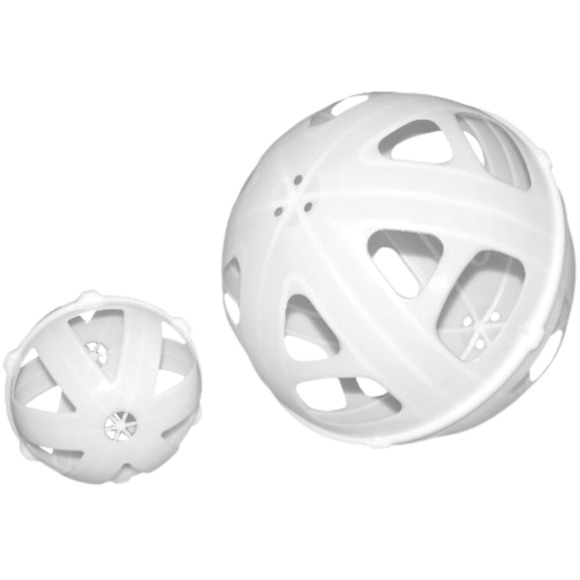
The most common design used in poly water tanks for transport is the ball baffle system. Rather than fixed rigid walls,ball baffles are floating spheres inside the tank that move with the water and disrupt the momentum of liquid movement without restricting filling, emptying, or cleaning. It's a practical solution that gives you surge control without complicating the tank's day-to-day use.
Baffled tanks are the standard for regular transport work, and the reason is straightforward. Whether the job is potable water delivery, agricultural runs, or servicing a construction site, a moving tank is a moving load, and that load needs to be managed.Water cartage tanks built with baffles handle that reality by design.
Where Non-Baffled Tanks Fit In
A non-baffled tank is a single open chamber with nothing inside to interrupt liquid movement. That simplicity has its place. Non-baffled tanks are easier to clean thoroughly, which matters in applications where contamination risk is a concern. They're also straightforward to manufacture, which generally makes them more affordable at the same capacity.
The limitation is physics. A full non-baffled tank on the move is a significant amount of liquid with nothing to stop it shifting. At low speeds on flat ground this is manageable. On public roads, uneven terrain, or anywhere that involves braking and cornering at normal speeds, the surge becomes a real handling issue and a transport safety concern.
Non-baffled poly water tanks are better suited to stationary water storage, or situations where they're moved infrequently, slowly, and over short distances.
Making the Right Call for Your Application
The question isn't really baffled versus non-baffled in isolation. It's how the tank is going to be used most of the time.
If the tank is staying in one place and being drawn from as a storage unit, a non-baffled tank does the job without the added cost. If it's going on a trailer or ute tray and hitting the road regularly, a baffled tank is the appropriate choice for load stability and transport safety, and in many cases it's what road transport regulations expect.
For agricultural water tanks covering paddocks and property tracks, for construction water carts working around active sites, or for any setup where the tank is trailer or vehicle mounted and regularly moving with a full or partial load, baffles aren't a premium feature. They're just how a transport tank should be built.
Tank Management Australia carries a range ofwater transport tanks to suit trailers, utes, trucks, and agricultural equipment, in capacities suited to most applications. If you're not sure which setup suits your situation, the team can help you work it out before you buy.
Frequently Asked Questions
What is the difference between a baffled and non-baffled water cartage tank?
A baffled tank has internal baffles that limit water movement during transport, improving load stability and vehicle handling. A non-baffled tank is an open single chamber, better suited to stationary storage than to regular road or paddock transport.
Why are baffles important in water transport tanks?
When a tank is in motion, water shifts with every change in speed or direction. Without baffles, that surge affects how the vehicle or trailer handles. Baffles break up the liquid movement, reducing surge and making the load more predictable and safer to transport.
Do I need a baffled water cartage tank?
If you're transporting water regularly on public roads, farm tracks, or construction sites, yes. A baffled tank is the appropriate choice for anything beyond slow-speed, short-distance movement.
Can non-baffled tanks be used for transporting water?
They can be used for limited, low-speed applications, but they're not designed for regular transport. Liquid surge in a non-baffled tank becomes a genuine safety issue at normal road speeds or on uneven ground.
Are baffled water cartage tanks available in different sizes?
Yes. Baffled tanks are available across a range of capacities to suit different vehicles and applications, from ute-mounted setups to larger trailer and truck-mounted tanks.


 Previous article