


When Do You Need an IBC Bund With a Cover?
Outdoor IBC storage introduces variables that can quietly erode the effectiveness of your spill containment plan. A covered IBC bund isn’t just a convenience — it’s a frontline defence against rainwater ingress, contamination, and compliance failure. Whether you're storing corrosives, fuels, or other hazardous liquids, this guide explores when a cover becomes essential and how to select the right setup for your site.
What Is an IBC Bund With a Cover?
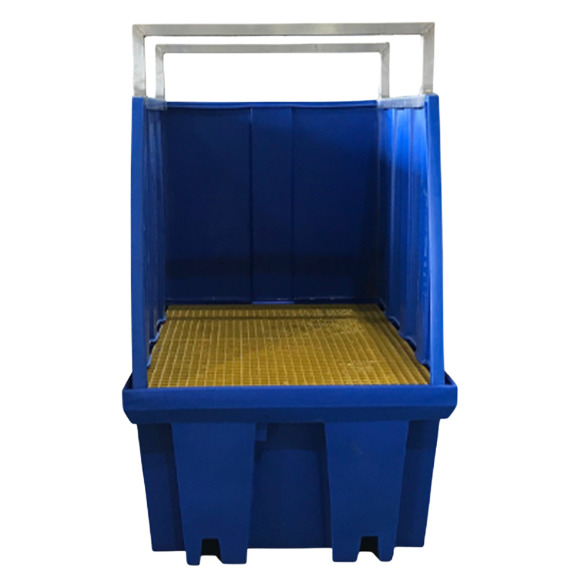
An IBC bund with cover is a secondary spill containment system that sits beneath an Intermediate Bulk Container (IBC). It captures leaks or drips, while the fitted cover prevents rainwater, dirt, and debris from entering the sump. The goal is simple: preserve bund capacity and ensure environmental integrity.
Unlike open bunds, a covered IBC bund remains ready for spills year-round. The base typically includes a grated platform over a sump capable of holding 110% of the IBC’s volume (usually 1,100 litres). The cover — often UV-resistant and waterproof — shields the bund from the elements while still allowing access via a zip or roll-up window for visual checks and valve operation.
When Is a Covered IBC Bund Required?
A covered IBC bund is not legally mandated in every situation, but for outdoor storage or spill-sensitive environments, it becomes essential. Consider one when:
Your IBCs are stored outdoors and exposed to the weather.
You store hazardous or environmentally sensitive liquids.
You need to prevent diluted runoff from entering drains or soil.
The bund must always retain 100% of its spill capacity.
Your site has seasonal weather changes that affect containment reliability.
In these scenarios, covers are more than accessories — they are preventative controls that reduce spill volume, response time, and environmental exposure. They support compliance by ensuring that the bund’s full capacity is available when it matters most.
Why Covers Matter for Spill Containment Capacity
Bunds without covers act like open basins. Rainwater gradually accumulates through the grate designed to catch chemical leaks. In just a few weeks, stormwater can occupy 30% to 50% of a bund’s volume.
This severely compromises spill capacity. If a 1,000-litre IBC fails and the bund is already half-full of rain, the spill will overflow — spreading contaminants across the yard, into drains, or onto surrounding land.
A covered IBC bund prevents this. It sheds rain from a fitted cover, keeping the sump clean and dry. The result: full containment volume available at all times, with lower environmental and safety risks.
Key Benefits of Using a Covered IBC Bund
Maintains compliant spill capacity by keeping the sump dry
Prevents rainwater ingress and stormwater dilution
Reduces contamination risk from debris and wildlife
Protects stored liquids from UV rays and environmental exposure
Improves site safety with cleaner walkways and fewer slip hazards
For operations managers, this isn’t an upgrade — it’s a proactive control that prevents failure before it starts.
Choosing the Right Covered IBC Bund for Your Site
Effective covered IBC bunding depends on fit-for-purpose design. When selecting the right system, look for:
Bund capacity: Should hold at least 110% of your largest IBC (e.g., 1,100L for one 1,000L IBC).
Material: Choose chemical-resistant polyethylene for corrosion protection and outdoor durability.
Cover type: Removable fabric or hinged designs allow valve access without exposing the whole bund.
Forklift compatibility: Reinforced skids or pockets for safe handling and relocation.
Australian suitability: UV-stabilised and rainproof for regional climates like Darwin or outback mining sites.
For an in-depth breakdown, this guide on the right bund types for your site can help.
Why Source Covered IBC Bunds From Tank Management?
At Tank Management Australia, we specialise in robust, compliant spill containment solutions designed for real-world conditions. Our covered IBC bunds are constructed from durable polyethylene, fitted with user-friendly covers, and backed by site-specific advice.
Whether you manage a remote agricultural depot or a metro chemical yard, our team understands the risks and requirements. Our bunds are made to perform, not just pass inspection.
Explore our full range of IBC bunds with covers, or get in touch for expert guidance on bund capacity, chemical compatibility, and site compliance.
FAQs
1. When do I need an IBC bund with a cover?
A covered IBC bund is recommended when IBCs are stored outdoors, exposed to rainfall, or used to store hazardous or environmentally sensitive liquids.
2. Why is rainwater a problem in uncovered IBC bunds?
Rainwater takes up sump space, reducing spill containment capacity and increasing the risk of overflow during an actual leak.
3. Does a covered IBC bund affect spill compliance?
Yes — covers help maintain full bund capacity, keep contaminants out, and improve spill control performance.
4. Are covered IBC bunds suitable for chemical storage?
Yes, when made from chemical-resistant materials like polyethylene, they are suitable for storing a wide range of industrial and chemical liquids.


 Previous article